
BLOG
Why Tree Root Intrusion Is a Common Cause of Blocked Sewer Pipes in Fairfield and Surrounding Suburbs
Tree roots are a recognised cause of wastewater pipe blockages across Fairfield NSW. Underground sewer pipes carry wastewater away from homes and businesses, but cracks, damaged joints and deteriorating connections can allow roots to enter the drainage system. Once inside, roots can grow through the pipe and restrict the movement of wastewater.
Fairfield has established residential areas, landscaped properties and mature trees. Where underground sewer pipes run close to established root systems, damaged pipework can become a source of recurring drainage problems. Understanding how root intrusion develops helps property owners recognise the warning signs and avoid relying on repeated temporary blockage clearing.
How Tree Roots Enter Underground Sewer Pipes
Tree roots naturally grow towards moisture and nutrients in the surrounding soil. Wastewater pipes can provide an attractive source when a damaged section allows moisture to escape.
Contrary to a common misunderstanding, healthy roots do not normally force their way through an intact, properly maintained sewer pipe. They generally enter through existing weaknesses, such as:
Cracks in older pipe sections
Gaps between pipe joints
Deteriorated rubber or cement seals
Damaged connections following ground movement
Broken sections caused by previous excavation or physical damage
Once a small root enters through an opening, it can continue growing inside the pipe. Wastewater provides moisture and nutrients that support further growth.
As the root mass expands, it catches toilet paper, waste and other material travelling through the drainage system. These materials gradually accumulate around the roots, reducing the available space for wastewater to flow.
A minor opening can therefore develop into a significant obstruction. If the damaged section remains unrepaired, roots may return after the initial blockage has been cleared.
Warning Signs of Tree Root Damage in Fairfield Properties
Root intrusion often develops gradually. Property owners may initially notice changes in drainage before a complete blockage occurs.
Recurring sewer blockages
A drain that repeatedly becomes blocked after clearing may indicate roots growing inside the pipe. If the same section experiences problems several times, the underlying pipe condition needs investigation.
Multiple fixtures draining slowly
When several toilets, sinks or floor drains experience slow drainage at the same time, the problem may involve a shared wastewater line rather than an individual fixture.
Water backing up through floor drains
A significant obstruction in an underground sewer pipe can prevent wastewater from moving towards the sewer connection. Water may then back up through lower drainage points.
Overflowing yard gullies
A yard gully provides an external point where wastewater can escape if the drainage system becomes obstructed. Sydney Water identifies water backing up through drains and possible yard gully overflows as warning signs of root intrusion.
Unusual wet patches and odours
Cracked or broken sewer pipes can allow wastewater to escape into surrounding soil. Greener grass above underground pipework, persistent damp areas and unpleasant smells may indicate damaged drainage infrastructure.
These symptoms do not automatically confirm tree root intrusion. A proper inspection helps establish whether the cause is roots, a collapsed pipe, accumulated debris or another drainage fault.
Why Tree Root Intrusion Can Affect Older Sewer Pipes
The condition of underground pipework plays a significant role in whether tree roots become a problem.
Older drainage systems may contain materials and jointing methods that deteriorate over time. Clay and earthenware pipes, for example, can develop cracks or joint separation as seals deteriorate and surrounding ground conditions change.
Ground movement can also place pressure on buried pipes. Changes in soil support, nearby excavation and heavy loads above underground drainage lines may contribute to cracking or damaged connections.
However, the age of a pipe alone does not confirm that roots have entered it. The actual condition of the pipe and its joints determines the likelihood of intrusion.
Fairfield City Council identifies tree-related plumbing issues and explains that property owners are generally responsible for maintaining plumbing on private land. The council may consider certain insurance claims, but supporting evidence and inspection of the affected pipe section may be required.
This distinction is important when a property owner suspects that roots from a council-owned tree have damaged private sewer infrastructure. The presence of a nearby tree does not automatically establish responsibility for the pipe damage.
How Tree Root Intrusion Is Identified and Repaired
Removing the obstruction is only one part of addressing root intrusion. The damaged section also needs attention if the roots are to be prevented from returning.
A drainage inspection can help identify where roots have entered the pipe and how much damage has occurred. A CCTV drain camera allows the internal condition of underground pipework to be examined without immediately excavating the entire line.
The inspection may reveal:
Root growth extending through pipe joints
Cracks allowing roots and groundwater to enter
Pipe sections that have shifted out of alignment
Collapsed or heavily damaged drainage sections
Waste and debris accumulating around root growth
The appropriate repair depends on the condition of the pipe. Removing roots can restore drainage temporarily, but it does not necessarily close the opening through which they entered.
Where the pipe remains structurally suitable, relining may provide a way to repair the damaged section internally. More severely damaged or collapsed sections may require excavation and replacement.
A repair should address both the obstruction and the structural weakness. Otherwise, roots may enter the same location again and cause another blockage.
Preventing Tree Root Problems Around Sewer Pipes
Prevention starts with knowing where underground wastewater pipes run through a property. Before planting trees, Fairfield property owners can obtain a sewerage service diagram through Sydney Water's Tap in service.
Sydney Water recommends avoiding tree planting within six metres of wastewater pipes. It also identifies several tree species with root systems that may create problems for underground drainage infrastructure.
When selecting trees, property owners should consider mature root spread rather than the size of a young plant. A tree that appears suitable for a small garden may develop an extensive root system as it grows.
Fairfield City Council also provides guidance on tree planting and plumbing protection. Where existing trees create problems, regular maintenance planning can help monitor affected drainage lines. Tree pruning or removal on private property may require council approval, depending on the circumstances.
Tree root intrusion is not simply a matter of trees growing too close to underground pipes. The condition of the drainage system, the location of existing defects and the surrounding root environment all contribute to the problem. Understanding these factors helps property owners in Fairfield and surrounding suburbs identify recurring sewer blockages and make informed decisions about maintaining their underground plumbing.
DISCOVER WHAT OUR CUSTOMERS HAVE TO SAY ABOUT US
REVIEWS
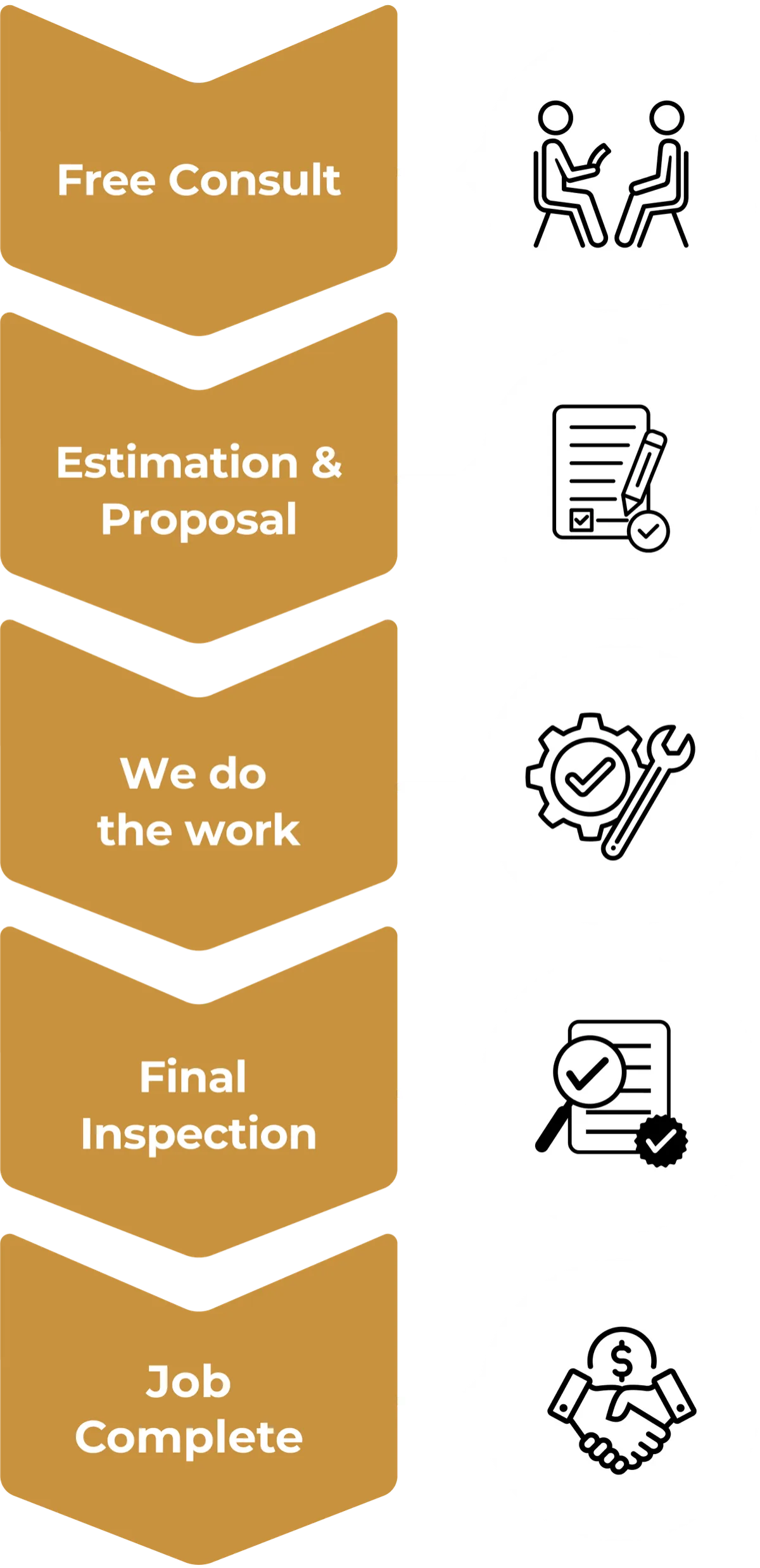
our process
Our process is simple and only contains a few simple steps

SERVICE AREAS
Proudly Serving These Areas

READY TO take the next step?
get a free quote TODAY!
Golden Maintenance Services Plumbing
Begovich Cres, Abbotsbury NSW 2176

