
BLOG
NSW Plumbing Regulations Explained: What Fairfield Property Owners Should Know About Licensed Plumbing Work and Compliance Standards
Plumbing work involves more than connecting pipes, installing fixtures or repairing leaks. It must also meet applicable safety and compliance requirements to protect a property's water supply, drainage system and occupants. For homeowners and businesses in Fairfield, understanding these requirements can help when arranging plumbing installations, repairs or renovations.
In New South Wales, plumbing and drainage work is regulated through licensing requirements, the Plumbing Code of Australia and relevant Australian Standards. These rules apply to residential, commercial and industrial properties, although the specific requirements depend on the type of work being carried out.
Why Plumbing Work Must Be Completed by a Licensed Professional
NSW requires an appropriate licence or certificate for plumbing, draining and gasfitting work, regardless of the job's cost or whether it takes place in a residential, commercial or industrial property.
The licence must cover the category of work being performed. Different categories apply to different plumbing and gasfitting activities, so holding a licence in one area does not automatically authorise every type of plumbing work.
Work may also be completed under the supervision arrangements permitted by NSW regulations. For example, tradespeople holding certain certificates must work under the general supervision of an appropriately licensed person. Apprentices and people without a licence must work under immediate supervision.
These requirements help ensure that plumbing work is completed by people with the appropriate qualifications, experience and oversight. Property owners in Fairfield should check that the person or business they engage holds the relevant licence for the work required.
The NSW Government provides an online licence-checking service where consumers can review a tradesperson's licence number, categories and current status.
Understanding the Plumbing Code of Australia and AS/NZS 3500
The Plumbing Code of Australia (PCA) establishes the requirements that plumbing and drainage installations must meet in NSW. It covers the design, construction, installation, replacement, repair, alteration and maintenance of plumbing systems.
The code provides two main pathways for demonstrating compliance:
Deemed-to-Satisfy Solution: The work follows the applicable requirements of AS/NZS 3500.
Performance Solution: An alternative technical approach demonstrates that the relevant performance requirements of the Plumbing Code of Australia are met.
AS/NZS 3500 is an important Australian and New Zealand plumbing and drainage standard. Its different parts address areas such as water services, sanitary plumbing and drainage, stormwater drainage and heated water systems.
The correct requirements depend on the type of installation and applicable code provisions. A performance-based design may be appropriate where a proposed solution does not follow the standard approach, but it must still demonstrate compliance with the required performance outcomes.
NSW also publishes specific variations and technical advisory notes that provide additional guidance for plumbing professionals. These can address matters such as installation requirements, backflow prevention and drainage arrangements.
Plumbing Documentation, Inspections and Certificates of Compliance
Certain plumbing and drainage projects require formal documentation before work begins. One important document is a Notice of Work (NoW), which identifies the proposed work and the person responsible for carrying it out.
Where required, the plumber or drainer must submit this notice to the relevant plumbing regulator before starting the work. In metropolitan Sydney, including Fairfield, Building Commission NSW manages the inspection process for work that requires inspection.
Not every plumbing job requires a Notice of Work. NSW guidance identifies exceptions for certain emergency and minor works, including replacing tapware or an existing hot water system, as well as bathroom renovations where fixture locations have not changed.
A Certificate of Compliance (CoC) is another important document. It confirms that completed plumbing and drainage work complies with the relevant legislation, regulations, Plumbing Code of Australia and applicable Deemed-to-Satisfy requirements. The responsible plumber or drainer must provide a copy to the person who arranged the work.
Some drainage projects also require a Sewer Service Diagram (SSD). This diagram records the location of private sewer pipes on a property and helps identify the drainage layout for future maintenance, repairs or building work.
Property owners should retain relevant certificates and drainage documentation with their building records. These documents can help clarify what work was completed and provide useful information for future property maintenance.
What Fairfield Property Owners Should Check Before Plumbing Work
Before arranging plumbing work, property owners should understand the nature of the job and the requirements that may apply. A straightforward tap repair may have different documentation requirements from a new drainage installation or a larger plumbing renovation.
A few practical checks can help:
Verify the licence: Confirm that the plumber holds a current licence or certificate covering the required category of work.
Understand the proposed work: Ask what repairs, replacements or installations are involved and whether additional approvals or inspections may be necessary.
Check documentation requirements: Find out whether a Notice of Work, inspection or Certificate of Compliance applies.
Keep records: Retain invoices, certificates, plans and other relevant documents after the work is completed.
Clarify drainage locations: For projects involving underground drainage, establish where private sewer pipes are located before excavation or construction begins.
For commercial and industrial properties, plumbing requirements may also involve additional considerations such as trade waste connections, backflow prevention and specific water or wastewater approvals. The relevant network utility operator may need to provide connection conditions or approvals for certain arrangements.
Understanding NSW plumbing regulations helps property owners make informed decisions when maintaining or upgrading their plumbing systems. Licensed work, appropriate documentation and compliance with the Plumbing Code of Australia all contribute to plumbing installations that meet the required standards and support the safe operation of a property.
DISCOVER WHAT OUR CUSTOMERS HAVE TO SAY ABOUT US
REVIEWS
our process
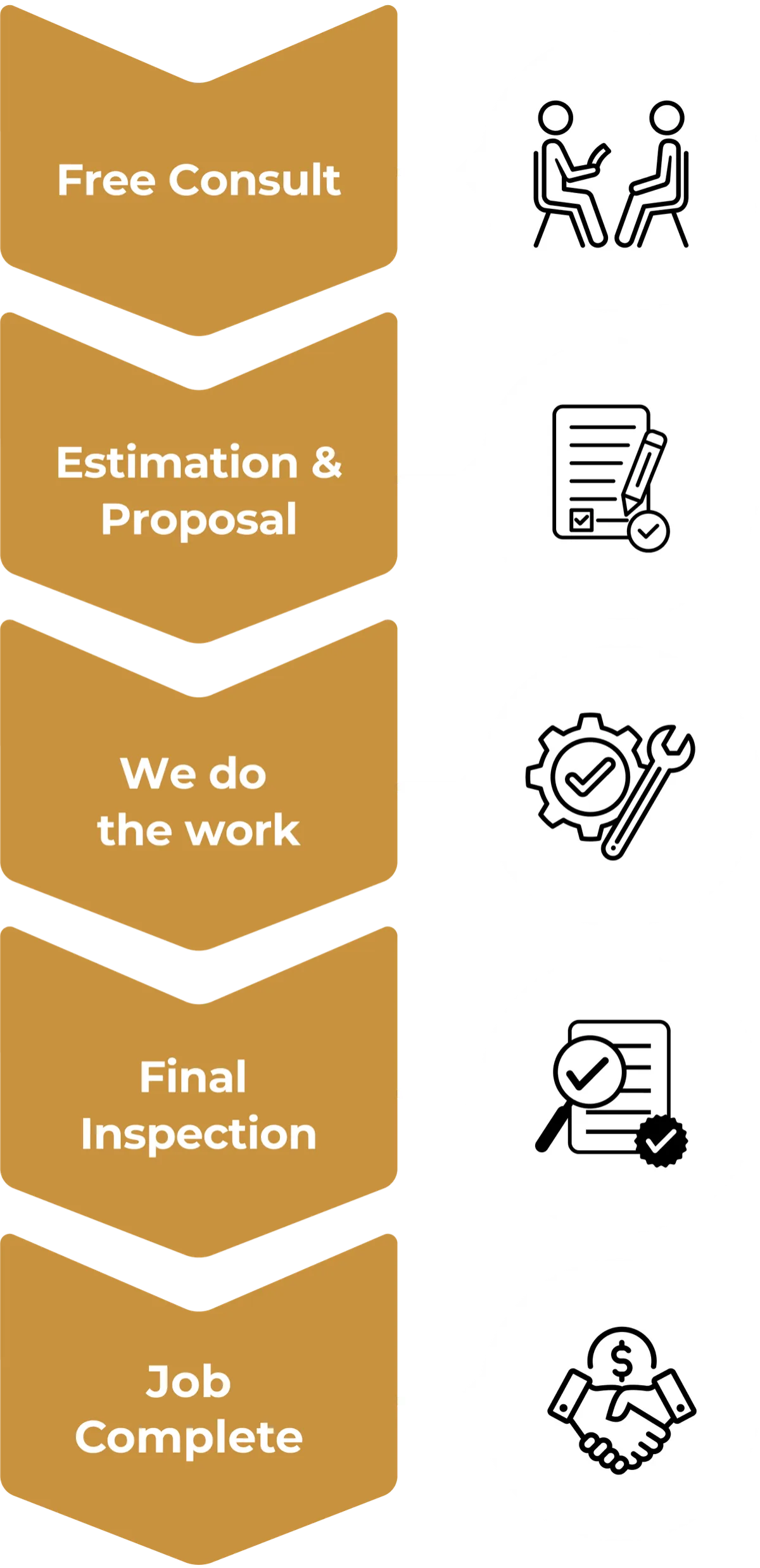
Our process is simple and only contains a few simple steps

SERVICE AREAS
Proudly Serving These Areas

READY TO take the next step?
get a free quote TODAY!
Golden Maintenance Services Plumbing
Begovich Cres, Abbotsbury NSW 2176

