
BLOG
What to Do When a Water Pipe Bursts at Your Fairfield Property: Practical Steps to Limit Water Damage
A burst water pipe can release a significant amount of water in a short time, potentially damaging floors, walls, ceilings, furniture and electrical equipment. For property owners in Fairfield, knowing what to do immediately can help limit the spread of water while the problem is assessed.
A burst pipe may occur suddenly, or a smaller leak may develop into a more serious break. Regardless of the cause, the first priorities are to keep people safe, stop the water supply if possible and identify whether the damaged pipe belongs to the private property or the public water network.
Turn Off the Water Supply if It Is Safe
The first step when dealing with a burst water pipe is to stop the flow of water. If the leak is coming from pipework within your property, locate the water meter and turn off the meter tap to isolate the water supply.
In Sydney, the water meter is commonly located near the front boundary of a property. The meter tap controls the water supply entering the property, helping prevent additional water from flowing through damaged pipes.
If the burst pipe is inside a building, you may also have an internal isolation valve that controls water to a particular section or fixture. This can be useful where the leak is limited to one area and the valve is accessible.
Do not attempt to reach a valve if doing so requires walking through deep water, entering an unsafe area or approaching exposed electrical equipment. Safety should take priority over stopping the leak.
Sydney Water explains that property owners are generally responsible for private water pipes and fittings, while the water main and water meter are maintained by Sydney Water.
2. Keep Away from Electrical Hazards
Water and electricity create a serious safety risk, particularly when a burst pipe affects indoor areas. Water may spread beneath appliances, reach electrical outlets or enter ceiling spaces where wiring and lighting equipment are installed.
Avoid touching electrical switches, power points, appliances or equipment that may have come into contact with water. Do not walk through standing water if electrical equipment could be affected.
If it is safe to access the switchboard without entering a wet area, power to the affected section may be isolated. Otherwise, stay clear and arrange assistance from a qualified electrician. If there is an immediate danger, contact emergency services.
Also keep children, visitors and pets away from the affected area until it has been assessed and made safe.
Limit Water Damage Around the Property
Once the water supply has been isolated and the area is safe to enter, take reasonable steps to prevent further damage.
Move furniture, rugs, electrical appliances and personal belongings away from the affected area if they can be moved safely. Use towels, buckets or suitable containers to collect small amounts of remaining water where appropriate.
If water is leaking through a ceiling, avoid standing underneath it. A ceiling that has absorbed water may become unstable, particularly if water has collected above the plasterboard.
For larger leaks, avoid attempting extensive clean-up without the appropriate equipment. Water can travel behind walls, beneath flooring and into areas that are not immediately visible.
Taking photographs of the affected pipework, water damage and surrounding areas can also help document the condition of the property before repairs and restoration work begin.
Identify Where the Burst Pipe Is Located
Not every burst pipe is the responsibility of the property owner. The location of the damaged section determines which organisation or party may need to arrange the repair.
In general, Sydney Water maintains the water main and water meter. Property owners are responsible for private water pipes and fittings on their property, although specific responsibility can depend on the pipe's location and connection arrangements.
For example, water escaping from a pipe inside a home or from private pipework between the meter and the building will generally require investigation by a licensed plumber.
If water is escaping from a public water main, street connection or the water meter itself, Sydney Water may be responsible for investigating and arranging repairs. Its guidance also explains that it may repair certain sections between its water main and the meter, subject to the applicable conditions.
If the source is unclear, avoid digging or attempting to repair underground pipework yourself. The relevant network provider or a licensed plumber can help establish where the fault is located.
Arrange a Proper Inspection and Repair
After the immediate water flow has been controlled, the damaged pipe needs to be inspected to determine the cause and extent of the problem.
A burst may result from deterioration, corrosion, damaged fittings, excessive pressure or physical damage to exposed pipework. Underground pipes may also develop leaks that are difficult to locate without specialist inspection equipment.
A licensed plumber can assess the affected section, identify whether other parts of the system have been compromised and determine an appropriate repair method.
In NSW, plumbing work beyond permitted minor maintenance must be carried out by an appropriately licensed professional. Sydney Water also advises property owners to use licensed plumbers for larger plumbing problems and repairs.
Once the repair is completed, the affected pipework should be checked for leaks and the water supply restored carefully. Any damp building materials or damaged electrical equipment may require separate assessment before the area is used normally again.
A burst water pipe can be stressful, but responding in the right order helps reduce unnecessary damage. Isolating the water supply when safe, avoiding electrical hazards, protecting belongings and arranging a proper inspection are important steps for managing the situation at a Fairfield property.
DISCOVER WHAT OUR CUSTOMERS HAVE TO SAY ABOUT US
REVIEWS
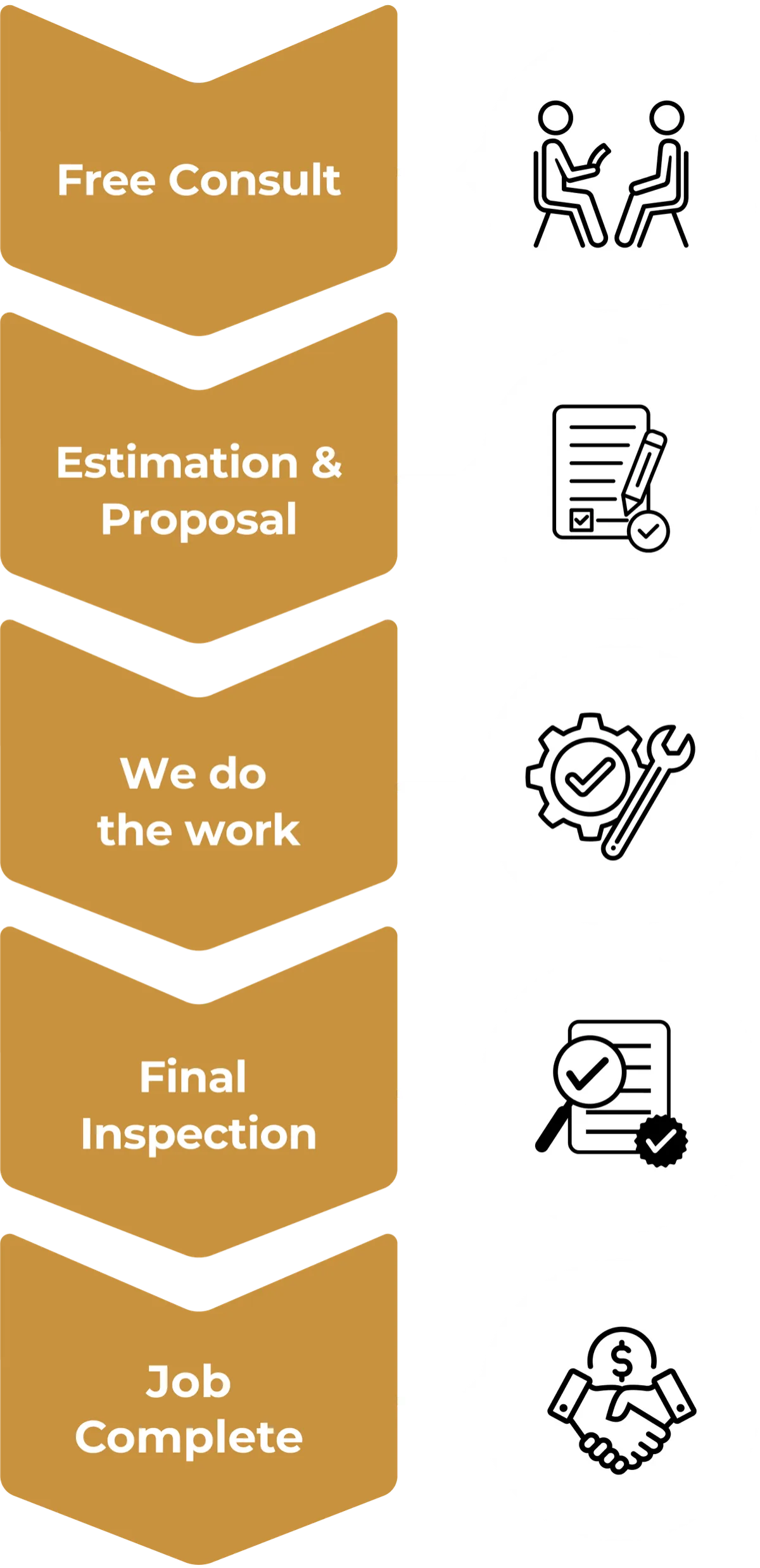
our process
Our process is simple and only contains a few simple steps

SERVICE AREAS
Proudly Serving These Areas

READY TO take the next step?
get a free quote TODAY!
Golden Maintenance Services Plumbing
Begovich Cres, Abbotsbury NSW 2176

